Cigar Storage Guide
The Timeless Art of Preserving Flavor
A cigar is a living product that requires specific environmental conditions to stay in prime condition. Improper storage not only impairs its taste and aroma but can even render it completely worthless.
Why Professional Storage Matters ?
Preserve Flavor
Proper storage locks in a cigar’s original aroma and taste, preventing flavor loss or alteration for a perfect sensory experience with every puff.
Enhance Fermentation
In an optimal environment, the tobacco inside a cigar continues to ferment slowly, developing richer aromatic compounds and elevating its overall quality.
Protect Your Investment
High-quality cigars are expensive, and professional storage is essential to protect this investment.
Ideal Storage Conditions
Cigar storage demands strict temperature and humidity standards—the foundation of preserving cigar quality.
Consistent stability is far more critical than occasional compliance.

Temperature
Ideal range: 18°C–20°C. Short-term storage: ±2°C tolerance. Long-term aging: stable at around 19°C.
- Too high (>24°C):Accelerates loss of oils and aromas, dulling flavor. Promotes mold (especially near the foot) and hatches tobacco beetles, damaging cigars.
- Too low (<15°C):Halts aging. Flavors cannot meld. Tobacco becomes brittle; wrapper cracks easily, causing uneven burn.
- Sudden temperature changes:More harmful than steady extremes. Condensation forms inside, making the wrapper “sweat.” Causes flavor inconsistency or mold.

Humidity
Ideal range: 65%–70%.Daily smoking: 65%–68% for smoother burning.Long-term aging: 68%–70% for richer flavor development.
- Too high (>75%):Cigars absorb moisture and become soft; mold spots appear.Prone to extinguishing, tight draw, harsh smoke, musty or wet-wood taste.
- Too low (<60%):Rapid drying causes brittle, cracked wrappers and shrinkage.Aromas are lost; smoke becomes dry, harsh, and bitter.
- Uneven humidity:One side damp, one side dry leads to uneven burn, half-extinguishing, and unbalanced flavor.

Proper Ventilation
Key requirement: Gentle ventilation, no direct airflow. Slow air circulation only, not strong drafts.
- Insufficient ventilation (fully sealed):Traps CO₂ and moisture, creating stale “dead air.”Accelerates mold growth; cigars absorb unwanted odors (wood, surrounding items), resulting in musty, foul tastes.
- Excessive ventilation :Rapidly removes moisture, causing sudden humidity drops and cracked wrappers.Dilutes surface aromas and causes cross-contamination between different cigar brands/vintages.
- Tip:For humidors/cabinets, ventilation only needs built-in pores or slightly opening the lid. No fans required.

Avoid Light
Key rule: Total darkness. No natural or strong direct light.Handle cigars only in dim, soft light.
- Natural light (especially UV):UV breaks down carotenoids, aromatic esters, and flavor compounds.Natural tobacco aroma fades, replaced by sun-burnt, grassy notes.Wrapper fades, loses gloss; tobacco becomes brittle, damaging structure.
- Strong light (incandescent, spotlights):Creates localized heat, unbalancing temperature and humidity.Causes hard, dry spots, wrapper discoloration, and uneven burning.
- Storage tip:Keep cigars in a light-proof humidor/cabinet, away from windows and balconies.
Storage Equipment Selection
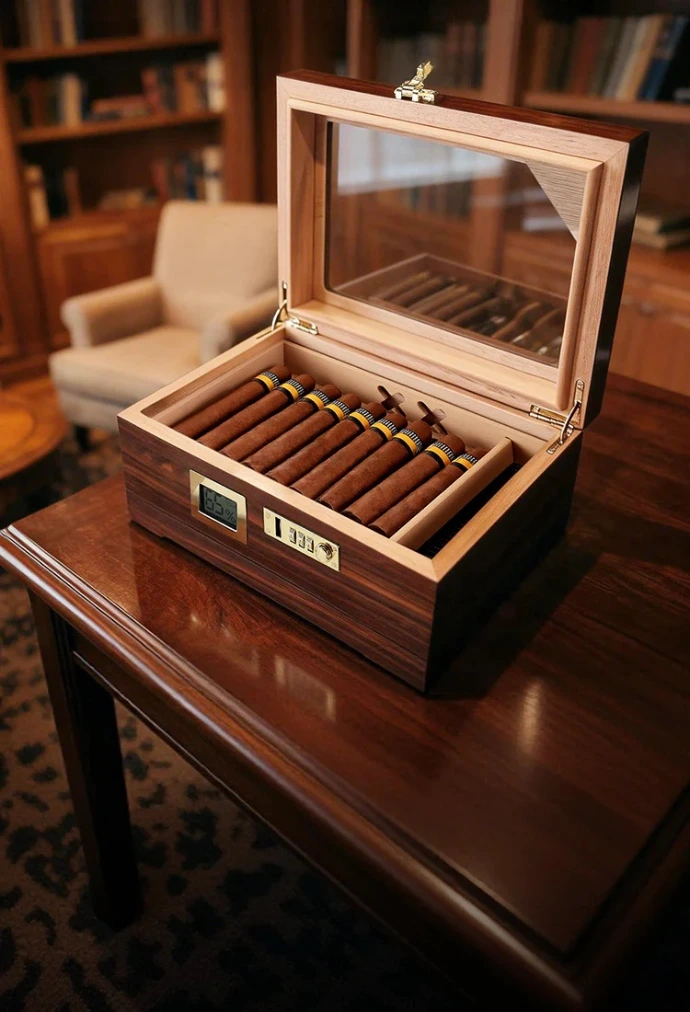
Humidor
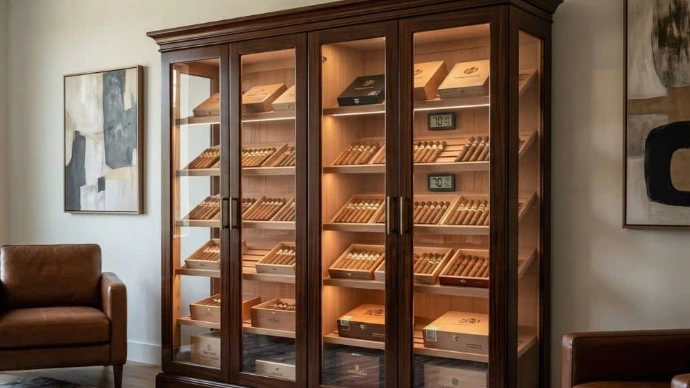
Cigar Cabinet
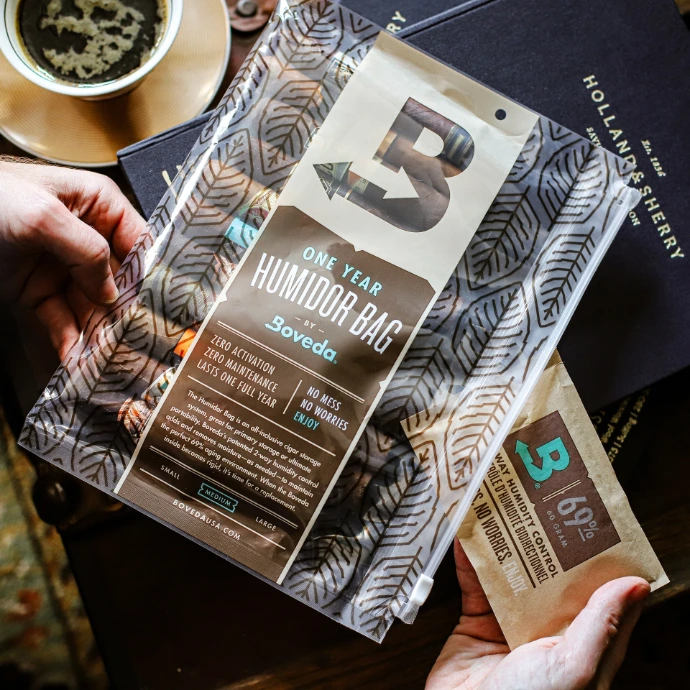
Travel Humidor Pouch
Suitable for short-term storage and travel, typically holding 5–10 cigars. Not for long-term use: its moisture retention is limited, making it only a temporary solution.
Important Tips :
- Season a newly purchased humidor for 7–10 days to allow the wood to absorb moisture fully.
-
- Choose equipment with a temperature and humidity display for easy daily monitoring.
-
- Inspect equipment operation regularly to ensure stable temperature and humidity levels.
-
- For large cigar cabinets, opt for brands with after-sales service.
Troubleshooting Common Issues

Over-Dry Cigars
Place over-dry cigars in a slightly more humid environment, but do not set them directly on the humidifier. Slow rehydration takes several days—be patient to avoid cracking from rapid moisture absorption. A travel humidor pouch can be used to assist with rehydration.

Over-Humidified Cigars
Transfer over-humidified cigars to a lower humidity environment (around 60%–65%) and increase ventilation. Temporarily remove the cigars from the humidor and place them in a cool, dry area for a few hours (do not leave for too long) to avoid cracking from rapid drying.

Beetle Infestation
